


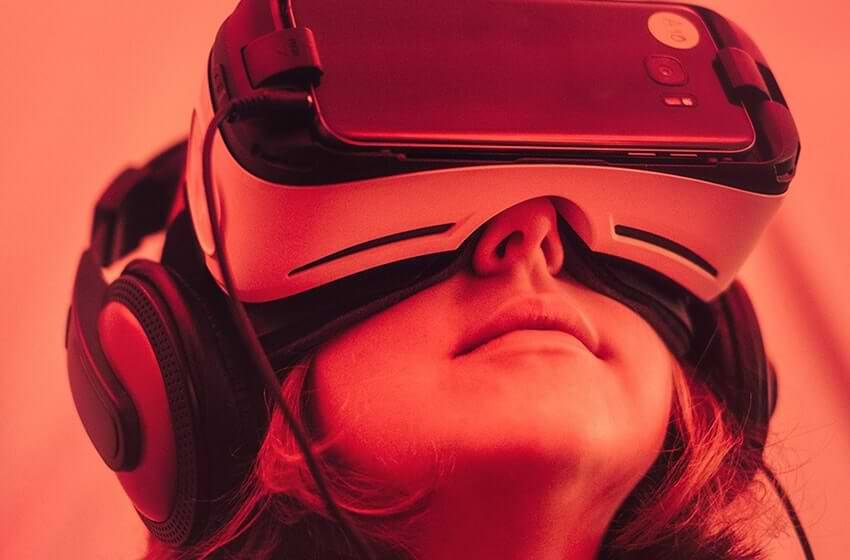
Imagine putting on a headset and suddenly finding yourself on another planet, inside a video game, walking through a historical city, or sitting in a virtual meeting room with people thousands of kilometres away.
That is the incredible thing about Virtual Reality (VR).
VR isn’t simply another form of entertainment. It is changing how people learn, work, communicate, create, and experience digital environments.
What Makes Virtual Reality So Different?
Traditional screens show us digital content from a distance.
Virtual Reality tries to put us inside the experience.
A VR headset tracks your head movements and adjusts the virtual environment accordingly. Look left, and the virtual world moves with you. Look up, and you can see what’s above you.
This sense of presence makes VR feel much more immersive than watching something on a television, computer, or smartphone.
VR Is Transforming Entertainment
Gaming is one of the most popular applications of Virtual Reality.
Instead of controlling a character from behind a screen, players can become part of the environment. They can look around, interact with objects, and physically move through virtual spaces.
But VR entertainment goes beyond gaming.
Virtual concerts, immersive movies, virtual tourism, interactive experiences, and social platforms are opening new possibilities for how people spend their free time.
A New Way to Learn
One of the most exciting applications of VR is education.
Imagine learning about the human body by exploring a 3D virtual model instead of simply reading about organs in a textbook.
Or imagine studying history by virtually walking through an ancient city.
VR can make abstract concepts easier to understand by turning them into interactive experiences.
For students, this can make learning more engaging and memorable.
Virtual Reality in Healthcare
VR is also finding applications in healthcare.
Medical professionals can use virtual environments for training and simulation. Students can practise procedures in controlled environments before working with real patients.
VR-based experiences are also being explored for rehabilitation, pain management, and certain forms of therapy.
The ability to create controlled and repeatable environments makes VR particularly useful for training and simulation.
The Future of Work Could Be More Immersive
Remote work has already changed how people communicate.
Video calls allow colleagues to see and speak with one another, but VR could take remote collaboration a step further.
Imagine entering a virtual office where you can interact with 3D models, collaborate around a virtual table, or give a presentation to colleagues represented by digital avatars.
For industries such as architecture, engineering, design, training, and product development, this could create entirely new ways of working together.
Virtual Travel and Exploration
Not everyone has the time or money to travel around the world.
VR can provide an alternative way to explore places virtually.
You could walk through famous landmarks, explore museums, experience natural environments, or visit locations that would otherwise be difficult to access.
It doesn’t replace real travel, but it can make exploration more accessible.
There Are Still Challenges
Despite its potential, VR isn’t perfect.
Headsets can be expensive, extended use may cause discomfort for some people, and high-quality virtual experiences require powerful hardware and carefully designed software.
There are also important questions around privacy, digital identity, accessibility, and how much time people should spend in virtual environments.
As the technology develops, solving these challenges will be just as important as creating new experiences.
What Could VR Look Like in the Future?
The future of VR could be far more immersive than today’s experiences.
Better displays, lighter headsets, improved motion tracking, artificial intelligence, realistic virtual environments, and more natural interaction could make digital experiences feel increasingly lifelike.
VR may eventually become less about putting on a headset and more about simply entering a digital environment whenever we need it.
Final Thoughts
The incredible thing about Virtual Reality is not just the technology itself.
It is the possibility of experiencing things that were previously impossible or difficult to access.
You can explore another country, practise a complex skill, enter a virtual classroom, collaborate with people around the world, or experience an entirely fictional universe—all from the same device.
Virtual Reality isn’t just changing what we see on a screen. It is changing where we believe the experience is happening.
And that could make VR one of the most transformative technologies of the digital age.